Showing 49 Result(s)

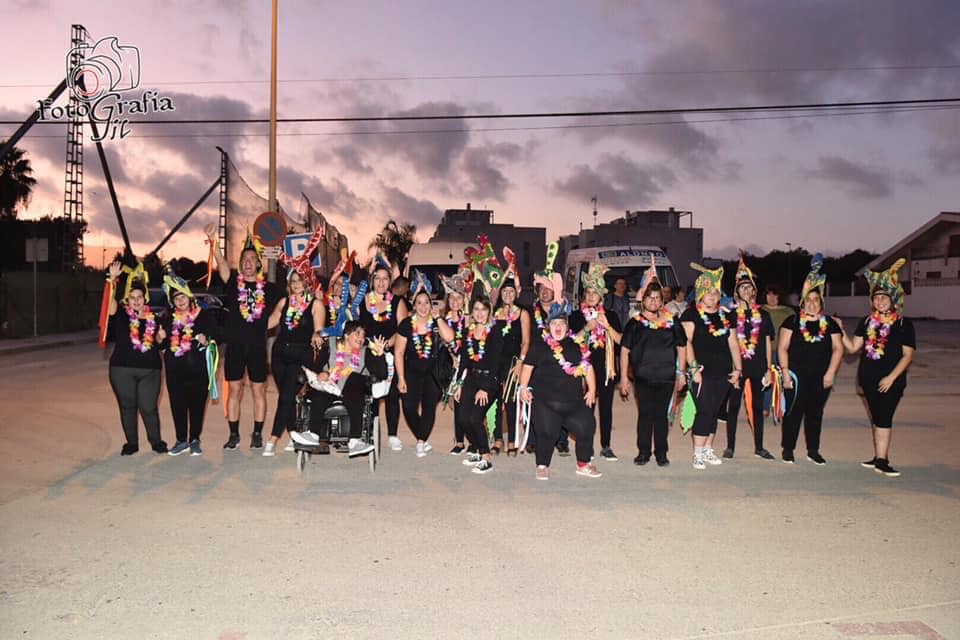
En comparsa

Durante las pasadas festividades en torno a la Virgen del Rosario a principios de octubre, estuvimos participando en el desfile de comparsas y carrozas de papelillo de las fiestas patronales de Torre Pacheco. Este año la temática elegida fue caballitos de mar. Durante estos meses los trajes y la carroza han sido realizados en el Centro de Día y el la residencia de Prometeo, siendo cada traje único y diferente. Esperamos que el resultado os guste tanto como nos ha gustado a nosotros.

VI COMIDA SOLIDARIA DE PROMETEO

Ya tenemos cartel para la VI COMIDA SOLIDARIA DE PROMETEO.

Será el próximo 10 de noviembre, desde las 12.00 h, en el Aquario Celebraciones.

PRECIO: Adultos 27€, niños (3-12 años) 10€ y niños de 0-3 años entrada gratuita.
MENÚ: Buffet libre.

Gracias una vez más al Aquario Celebraciones por colaborar con nuestra asociación. MUCHAS GRACIAS

Ya está abierta nuestra residencia

Ya se han abierto las puertas de nuestra residencia de ‘El Pasico’ en Torre Pacheco y todos los residentes se están adaptando perfectamente a su nueva casa y se muestran muy participativos en todas las actividades que están desarrollando. En esta nueva vivienda hay además dos plazas que quedan libres para destinarse a uso de respiro familiar o bien para otros usuarios que precisen de esta vivienda en alguna situación de emergencia.

Los usuarios están atendidos por monitores y cuidadores, un total de 8, además de contar con una trabajadora social, servicio de enfermería y de fisioterapia. Esta residencia será un complemento a otros servicios que presta Prometeo como son el Centro de Día, que está en obras para así ampliar sus instalaciones, y el Centro de Atención Temprana.

Con actuaciones como las viviendas tuteladas se pretende que sus usuarios tengan el mayor nivel de independencia posible y que puedan participar en su entorno como cada uno elija, con los derechos y obligaciones que les corresponden como ciudadanos, facilitándoles el apoyo necesario.

Calendario de Los Perrancos

ATENCIÓN, ATENCIÓN!!!

Ya está casi todo para la presentación del calendario solidario Prometeo 2019. Este año hay que darle las gracias a Los Perrrancos, y en especial a Juan, por esos calentamientos de cabeza. Para nosotros ha sido un placer poder realizar este fantástico calendario y conocer más de cerca a estos moteros.

Los Perrrancos junto con la Asociación Prometeo de Torre-Pacheco han elaborado un calendario solidario el cual la recaudación irá íntegramente a esta asociación. Hemos disfrutado de la sesión de fotos con el club y nos hemos divertido.El próximo día 20 de octubre a las 21h, en la terraza del Café del Tiempo (plaza De la Iglesia de Roldán) tendrá lugar la presentación de este calendario, con actividades y animación musical. Os esperamos!!
Es por una buena causa

Os esperamos el 20 de octubre en la presentación 😀😀😀

Hemos descubierto que las diferencias se superan con comprensión, tolerancia y cariño. Una experiencia que nos ha hecho ver que la mayor barrera es el desconocimiento. Nos han dado lo mejor, su manera de ver el mundo de manera especial. Gracias por darnos esta lección de vida.

–Moto Club Perrancos

Cócteles solidarios por Prometeo

Como cada año Melones el Abuelo llega con sus Cócteles Solidarios y en esta ocasión nos han elegido a nosotros, sí sí, a Prometeo. Así es como lo explican en sus redes sociales y desde aquí queremos dar las gracias por todo su esfuerzo para que consigamos más fácilmente nuestros objetivos. Y nos han hecho un vídeo precioso para explicarlo todo.

«En esta ocasión hemos querido aportar nuestro granito de arena a la Asociación Prometeo. Una asociación que lleva desde el año 1996 trabajando por conseguir la integración socio-cultural y laboral de personas con discapacidad. El número de los usuarios del centro ha ido creciendo con los años y en consecuencia el espacio ha quedado muy reducido, viéndose tanto usuarios como monitores afectados por ello.

Creemos que juntos podemos mejorar la situación de esta asociación y colaborar en la construcción de su nuevo «Centro de Día». 🏗️🏡☺️»

Ya han recaudado durante la «Semana Internacional de La Huerta y el Mar de los Alcázares» durante los días 14 al 25 de Agosto y ahora tenéis la ocasión de seguir ayudándonos en la «Feria de Murcia» del 31 de Agosto al 11 de Septiembre. Todo lo recaudado será íntegramente destinado a este proyecto.

¿Vendrás? 🙂

Patchwork solidario

Para comenzar la semana nada mejor que compartir una hermosa noticia; una de esas que no aparecen en los medios de comunicación pero, por su gran valor humano, mucho más importante que otras:

El curso está terminando, las profesoras y alumnas del Taller de Mari han decidido hacer el próximo fin de semana una exposición de los trabajos realizados durante estos meses.  La sala de exposiciones Gregorio García de Torre-Pacheco acogerá los días 1, 2 y 3 de junio una amplia muestra de las labores que han hecho  y que reflejan lo aprendido durante el curso.

 Además de disfrutar apreciando los trabajos individuales realizados por cada una, podremos contemplar uno muy especial,  hecho con la colaboración de todo el grupo: una manta de patchwork. 
Esta se manta se ha confeccionado  uniendo cada uno de los bloques que han realizado las distintas  alumnas con sus diferentes habilidades y destrezas. Es la suma de  trabajos realizados  con mucha ilusión y todo el cariño, con toda la paciencia y atención que requiere el aprendizaje de una nueva técnica… Y han pensado entre todas que,  si cada bloque individualmente no tiene más que el valor individual que para cada una supone recordar sus momentos del aprendizaje, si se unen entre sí pueden conseguir una obra importante, una prenda  que pueda ser útil para que alguien la disfrute;  maravilloso ejemplo de que cuando las personas unimos nuestras fuerzas podemos conseguir resultados extraordinarios.

Otra muestra de que en El Taller de Mari, además de labores también  se trabajan valores,  es que han acordado realizar un sorteo entre todos los visitantes  y amigos que deseen participar, donando a  Prometeo el importe de lo recaudado.

Os invitamos a visitar la exposición y  participar del sorteo de ese preciado regalo.  

GRACIAS!!!, MIL GRACIAS!!!

Episode 1: Important Tips for Podcasters

Episode 1: Important Tips for Podcasters

A podcast, or generically netcast, is an episodic series of digital audio or video files which a user can download and listen to. It is often available for subscription, so that new episodes are automatically downloaded via web syndication to the user’s own local computer, mobile application, or portable media player. It is distinct from Internet radio, which involves streaming rather than downloading.

The word was originally suggested by Ben Hammersley as a portmanteau of «iPod» (a brand of media player) and «broadcast»[dubious – discuss].The files distributed are in audio format, but may sometimes include other file formats such as PDF or EPUB. Videos which are shared following a podcast model are called video podcasts or vodcasts.

The generator of a podcast maintains a central list of the files on a server as a web feed that can be accessed through the Internet. The listener or viewer uses special client application software on a computer or media player, known as a podcatcher, which accesses this web feed, checks it for updates, and downloads any new files in the series. This process can be automated to download new files automatically, which may seem to users as though new episodes are broadcast or «pushed» to them. Files are stored locally on the user’s device, ready for offline use. There are many different mobile applications available for people to use to subscribe and to listen to podcasts. Many of these applications allow users to download podcasts or to stream them on demand as an alternative to downloading. Many podcast players (apps as well as dedicated devices) allow listeners to skip around the podcast and control the playback speed.

Some have labeled podcasting as a converged medium bringing together audio, the web, and portable media players, as well as a disruptive technology that has caused some people in the radio business to reconsider established practices and preconceptions about audiences, consumption, production, and distribution.[4][need quotation to verify] Podcasts are usually free of charge to listeners and can often be created for little to no cost, which sets them apart from the traditional model of «gate-kept» media and production tools. Podcast creators can monetize their podcasts by allowing companies to purchase ad time, as well as via sites such as Patreon, which provides special extras and content to listeners for a fee. Podcasting is very much a horizontal media form – producers are consumers, consumers may become producers, and both can engage in conversations with each other.

Episode 2: Music Production for dummies

Episode 2: Music Production for dummies

A podcast, or generically netcast, is an episodic series of digital audio or video files which a user can download and listen to. It is often available for subscription, so that new episodes are automatically downloaded via web syndication to the user’s own local computer, mobile application, or portable media player. It is distinct from Internet radio, which involves streaming rather than downloading.

The word was originally suggested by Ben Hammersley as a portmanteau of «iPod» (a brand of media player) and «broadcast».The files distributed are in audio format, but may sometimes include other file formats such as PDF or EPUB. Videos which are shared following a podcast model are called video podcasts or vodcasts.

The generator of a podcast maintains a central list of the files on a server as a web feed that can be accessed through the Internet. The listener or viewer uses special client application software on a computer or media player, known as a podcatcher, which accesses this web feed, checks it for updates, and downloads any new files in the series. This process can be automated to download new files automatically, which may seem to users as though new episodes are broadcast or «pushed» to them. Files are stored locally on the user’s device, ready for offline use. There are many different mobile applications available for people to use to subscribe and to listen to podcasts. Many of these applications allow users to download podcasts or to stream them on demand as an alternative to downloading. Many podcast players (apps as well as dedicated devices) allow listeners to skip around the podcast and control the playback speed.

Some have labeled podcasting as a converged medium bringing together audio, the web, and portable media players, as well as a disruptive technology that has caused some people in the radio business to reconsider established practices and preconceptions about audiences, consumption, production, and distribution.[4][need quotation to verify] Podcasts are usually free of charge to listeners and can often be created for little to no cost, which sets them apart from the traditional model of «gate-kept» media and production tools. Podcast creators can monetize their podcasts by allowing companies to purchase ad time, as well as via sites such as Patreon, which provides special extras and content to listeners for a fee. Podcasting is very much a horizontal media form – producers are consumers, consumers may become producers, and both can engage in conversations with each other.

Episode 3: Design in the 21st Century

Episode 3: Design in the 21st Century

A podcast, or generically netcast, is an episodic series of digital audio or video files which a user can download and listen to. It is often available for subscription, so that new episodes are automatically downloaded via web syndication to the user’s own local computer, mobile application, or portable media player. It is distinct from Internet radio, which involves streaming rather than downloading.

The word was originally suggested by Ben Hammersley as a portmanteau of «iPod» (a brand of media player) and «broadcast»[dubious – discuss].The files distributed are in audio format, but may sometimes include other file formats such as PDF or EPUB. Videos which are shared following a podcast model are called video podcasts or vodcasts.

The generator of a podcast maintains a central list of the files on a server as a web feed that can be accessed through the Internet. The listener or viewer uses special client application software on a computer or media player, known as a podcatcher, which accesses this web feed, checks it for updates, and downloads any new files in the series. This process can be automated to download new files automatically, which may seem to users as though new episodes are broadcast or «pushed» to them. Files are stored locally on the user’s device, ready for offline use. There are many different mobile applications available for people to use to subscribe and to listen to podcasts. Many of these applications allow users to download podcasts or to stream them on demand as an alternative to downloading. Many podcast players (apps as well as dedicated devices) allow listeners to skip around the podcast and control the playback speed.

Some have labeled podcasting as a converged medium bringing together audio, the web, and portable media players, as well as a disruptive technology that has caused some people in the radio business to reconsider established practices and preconceptions about audiences, consumption, production, and distribution.[4][need quotation to verify] Podcasts are usually free of charge to listeners and can often be created for little to no cost, which sets them apart from the traditional model of «gate-kept» media and production tools. Podcast creators can monetize their podcasts by allowing companies to purchase ad time, as well as via sites such as Patreon, which provides special extras and content to listeners for a fee. Podcasting is very much a horizontal media form – producers are consumers, consumers may become producers, and both can engage in conversations with each other.

Starting a Life-Coaching Practice of development

Starting a Life-Coaching Practice of development

Coaching is a form of development in which a person called a coach supports a learner or client in achieving a specific personal or professional goal by providing training and guidance.The learner is sometimes called a coachee. Occasionally, coaching may mean an informal relationship between two people, of whom one has more experience and expertise than the other and offers advice and guidance as the latter learns; but coaching differs from mentoring in focusing on specific tasks or objectives, as opposed to more general goals or overall development.

The first use of the term “coach” in connection with an instructor or trainer arose around 1830 in Oxford University slang for a tutor who “carried” a student through an exam.The word “coaching” thus identified a process used to transport people from where they are to where they want to be. The first use of the term in relation to sports came in 1861. Historically the development of coaching has been influenced by many fields of activity, including adult education, the Human Potential Movement, large-group awareness training (LGAT) groups such as “est”, leadership studies, personal development, and psychology.

Professional coaching uses a range of communication skills (such as targeted restatements, listening, questioning, clarifying etc.) to help clients shift their perspectives and thereby discover different approaches to achieve their goals.These skills can be used in almost all types of coaching. In this sense, coaching is a form of “meta-profession” that can apply to supporting clients in any human endeavor, ranging from their concerns in health, personal, professional, sport, social, family, political, spiritual dimensions, etc. There may be some overlap between certain types of coaching activities.

The concept of ADHD coaching was first introduced in 1994 by psychiatrists Edward M. Hallowell and John J. Ratey in their book Driven to Distraction.ADHD coaching is a specialized type of life coaching that uses specific techniques designed to assist individuals with attention-deficit hyperactivity disorder. The goal of ADHD coaching is to mitigate the effects of executive function deficit, which is a typical impairment for people with ADHD. Coaches work with clients to help them better manage time, organize, set goals and complete projects. In addition to helping clients understand the impact ADHD has had on their lives, coaches can help clients develop “work-around” strategies to deal with specific challenges, and determine and use individual strengths. Coaches also help clients get a better grasp of what reasonable expectations are for them as individuals, since people with ADHD “brain wiring” often seem to need external mirrors for accurate self-awareness about their potential despite their impairment.

Unlike psychologists or psychotherapists, ADHD coaches do not provide any therapy or treatment: their focus is only on daily functioning and behaviour aspects of the disorder.The ultimate goal of ADHD coaching is to help clients develop an “inner coach”, a set of self-regulation and reflective planning skills to deal with daily life challenges. A 2010 study from Wayne State University evaluated the effectiveness of ADHD coaching on 110 students with ADHD. The research team concluded that the coaching “was highly effective in helping students improve executive functioning and related skills as measured by the Learning and Study Strategies Inventory (LASSI).”Yet, not every ADHD person needs a coach and not everyone can benefit from using a coach.

Business coaching is a type of human resource development for business leaders. It provides positive support, feedback and advice on an individual or group basis to improve personal effectiveness in the business setting, many a time focusing on behavioural changes through psychometrics or 360-degree feedback. Business coaching is also called executive coaching,corporate coaching or leadership coaching. Coaches help their clients advance towards specific professional goals. These include career transition, interpersonal and professional communication, performance management, organizational effectiveness, managing career and personal changes, developing executive presence, enhancing strategic thinking, dealing effectively with conflict, and building an effective team within an organization. An industrial organizational psychologist is one example of executive coach. Business coaching is not restricted to external experts or providers. Many organizations expect their senior leaders and middle managers to coach their team members to reach higher levels of performance, increased job satisfaction, personal growth, and career development. Research studies suggest that executive coaching has a positive impact on workplace performance.

[BTEN id="120"]